01
Green-engineered nanocrystal technology
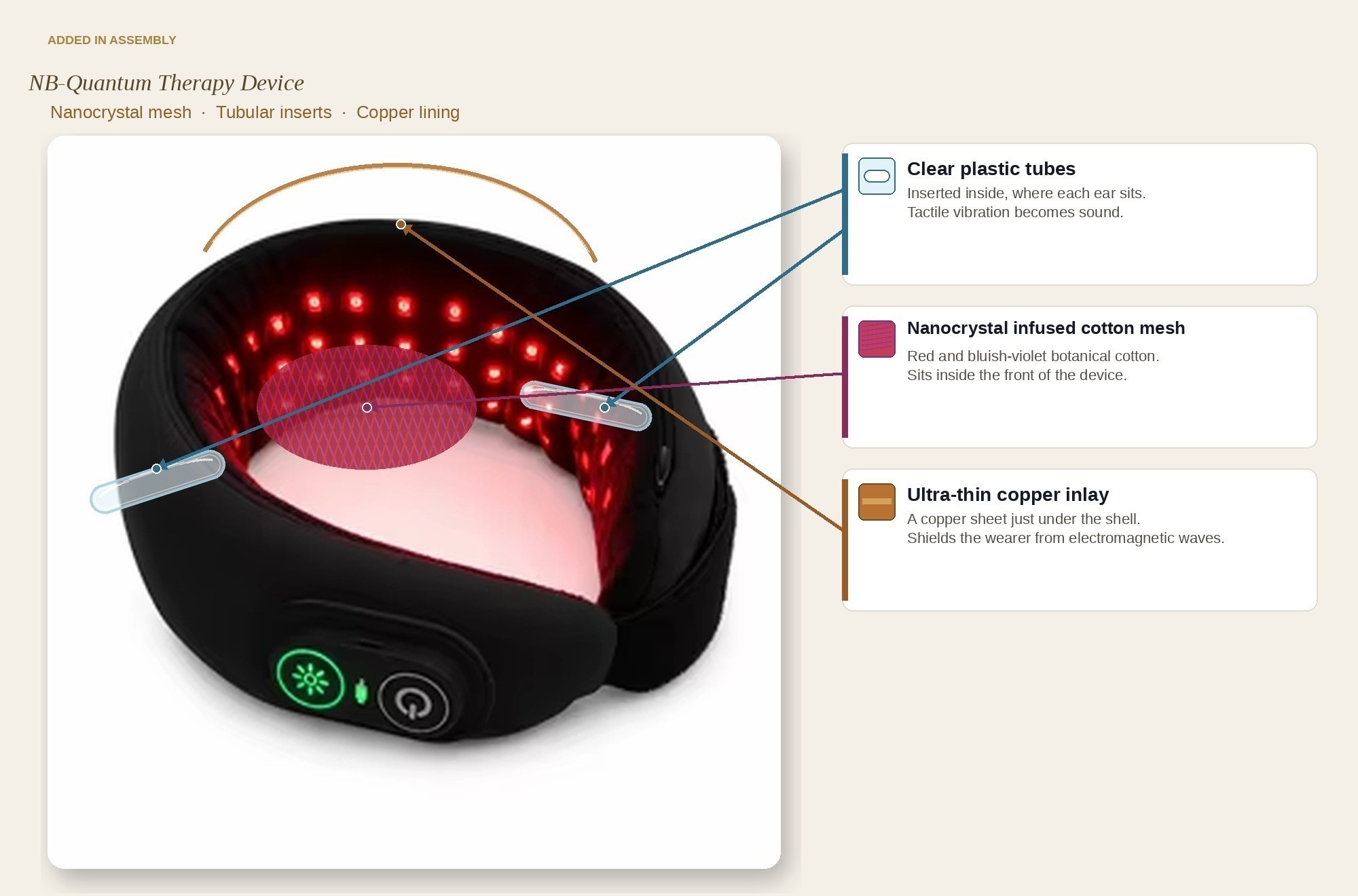
A natural, green-engineered nanocrystal technology in a botanical infused cotton mesh, inside the front panel. Passive. No current. No UV.
Mental clarity · Focus · Steady attention · Recovery support
An experience like no other. The NB-Quantum Device harnesses the power of light, sound, vibration, and nature. No Bluetooth frequencies, and that's intentional. Developed by physicists, fine-tuned by chiropractors. A full body wellness device for a general wellness session for mental clarity, focus, steadier attention, and recovery support.
Four differences, together: the modalities, a natural, green-engineered nanocrystal technology, botanical infused cotton mesh, tubular inserts, and a copper lining.
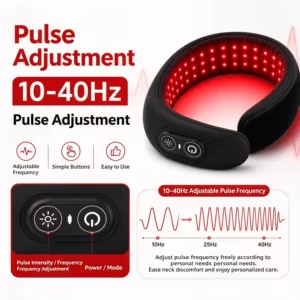
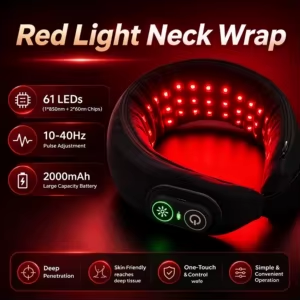
Standard on every unit: 61 LEDs at 660 nm and 850 nm, 10–40 Hz pulse adjustment, kneading vibration, one-touch controls, a 2000 mAh battery, and a soft cordless wrap.
Regular price $399.0056% off
Standard on every unit
01
A natural, green-engineered nanocrystal technology in a botanical infused cotton mesh, inside the front panel. Passive. No current. No UV.
02
Clear tubes sit where the ears are. Tactile vibration becomes resonant sound.
03
An ultra-thin copper layer under the shell. A lining, not a claimed shield against radiation.
04
Red and near-infrared light, a 10–40 Hz pulse, and resonant sound. A wellness session for clarity and focus.
Modalities
A full body wellness device. Light and a 10–40 Hz pulse, used as a general wellness session for mental clarity, focus, and steadier attention. Other placements are optional. This is not a medical device. These statements have not been evaluated by the FDA.
40 Hz is the primary setting for a clarity and focus session. The device also runs 10–40 Hz. Clear tubes at the ears turn the vibration into resonant sound. That is a session design, not a neurological treatment.
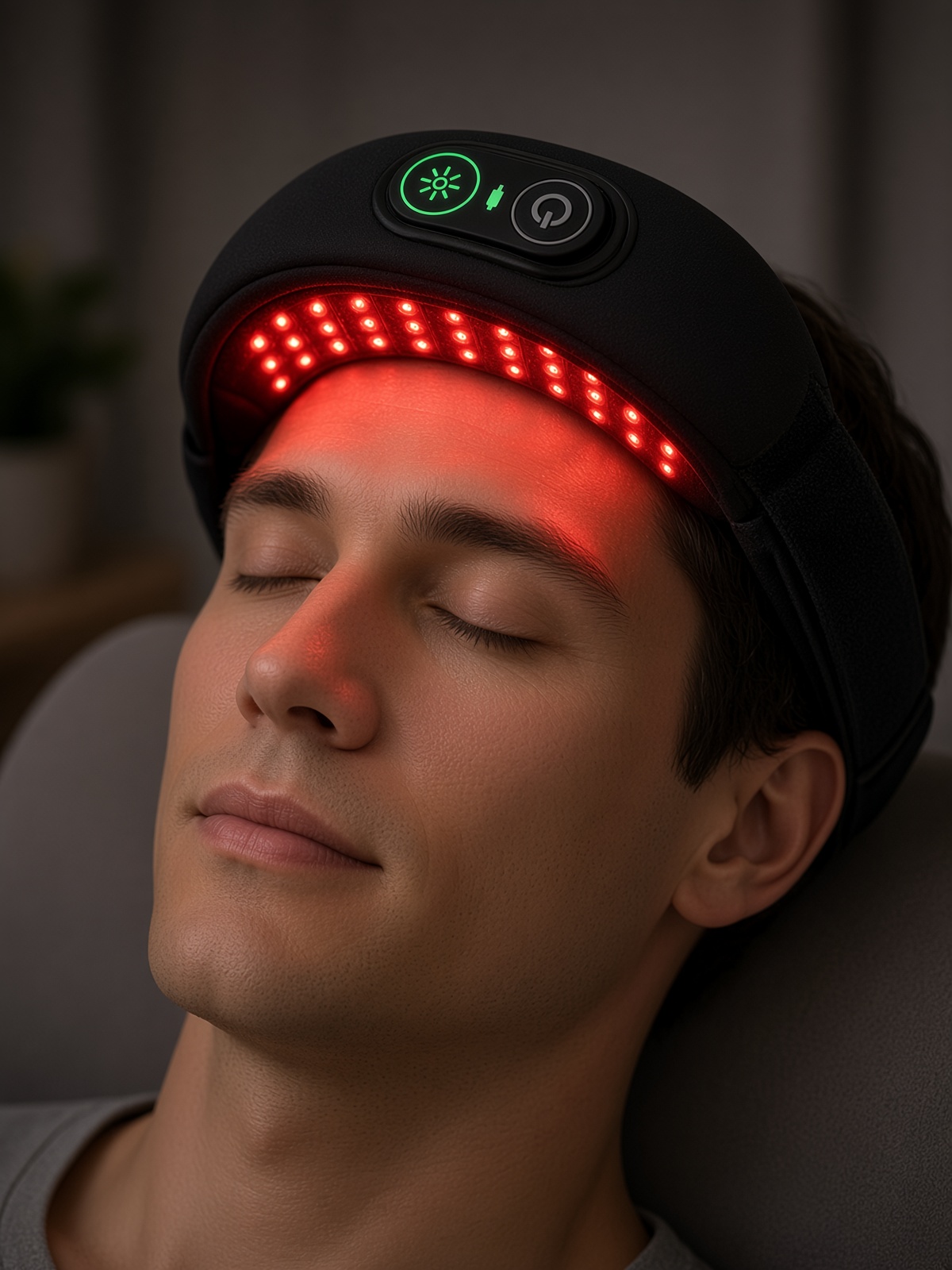
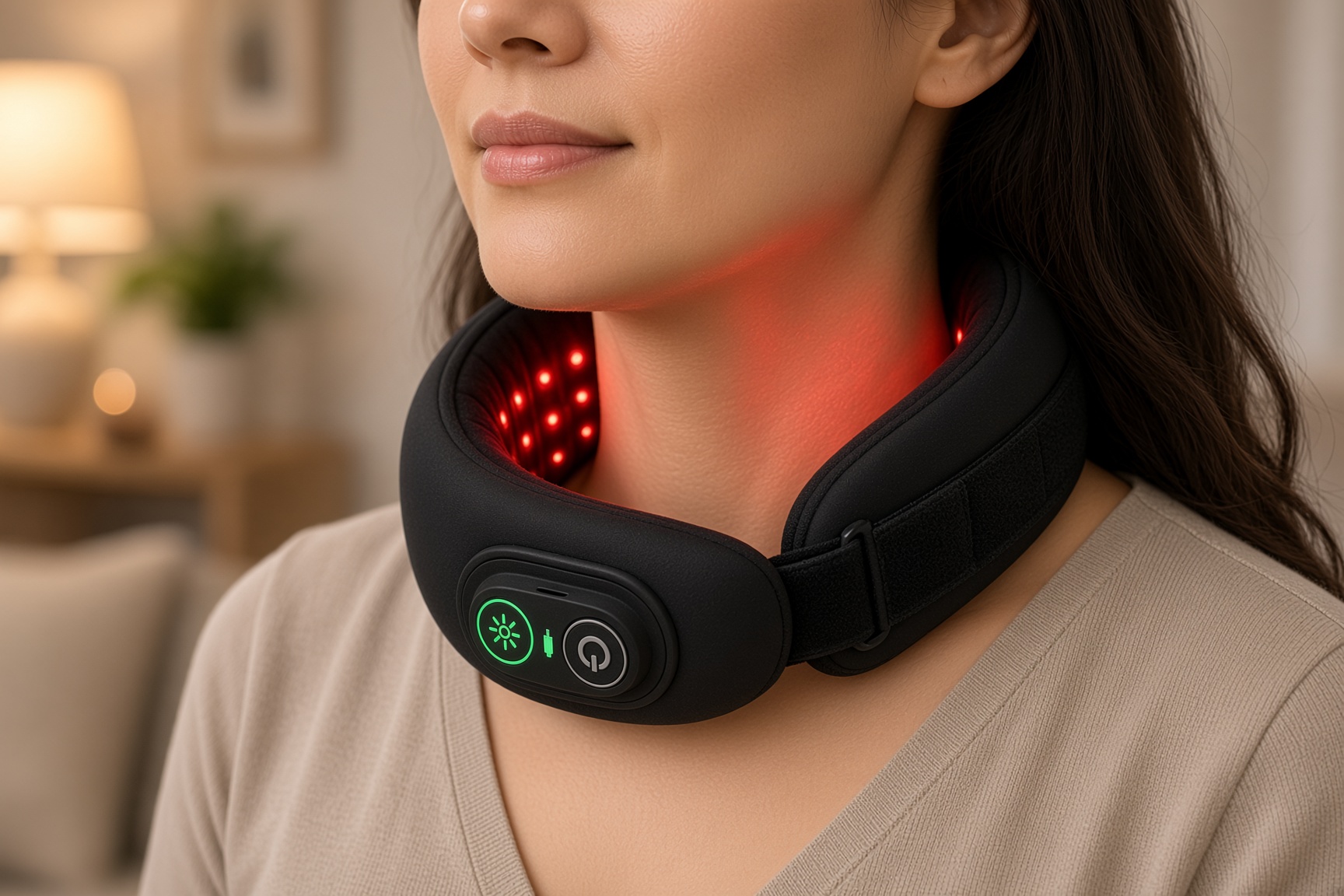
61 LED chips at 660 nm red and 850 nm near-infrared. Do not look into the LEDs. The same panel can be placed on the neck or soft tissue. Placement is optional and is not a treatment.
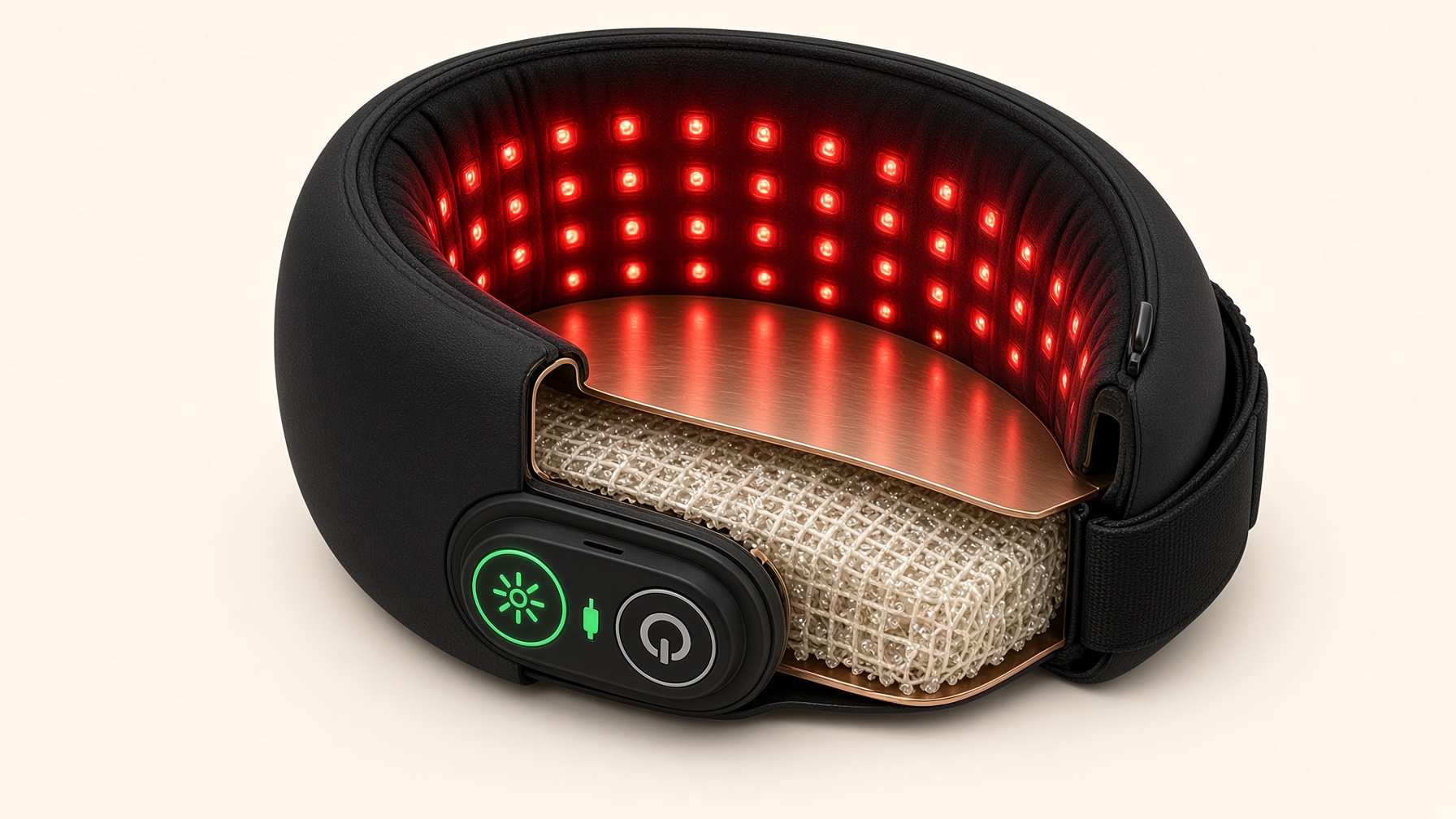
Outer shell, then a thin copper lining, then the botanical nanocrystal cotton mesh. The mesh is a material distinction, not a claimed treatment.
Primary: a wellness session for mental clarity and focus. Optional: neck, muscles, joints, back, or a limb. Optional sites are not treatments.
10–40 Hz
10–40 Hz is the adjustable pulse on every unit. 40 Hz is the primary setting for a clarity and focus session. Papers below studied other devices and models. They are not results of this product and are not a claim that a session treats any condition.
A slower setting on the dial. Laboratory papers have compared pulsed and continuous light on other lasers and in animal models, including tissue and injury studies. Those papers are not results of this product. A 10 Hz session is a wellness preference, not wound care or injury treatment.
The middle of the range, often chosen for comfort. Published reviews of red and near-infrared light rarely treat pulse rate as the main variable. This setting is a session preference, not a protocol for muscles, joints, or circulation.
The primary setting for a clarity and focus session. It overlaps a frequency used in sensory-stimulation research on other equipment. Studies in disease models, including Alzheimer’s research, are investigational. They are not a claim that this device treats memory, cognition, or any disease.
Larger trials of 40 Hz stimulation on other systems are still underway. This product has not been studied in those trials.
Published work on light and pulse used research devices, animal models, or clinical protocols. This device offers the same general wavelength and pulse range as a wellness session. It is not cleared or approved to diagnose, treat, cure, or prevent any disease. Do not look into the LEDs.
660 nm + 850 nm
Every unit uses 660 nm red and 850 nm near-infrared. Published papers discuss these bands. That discussion is background. It is not a result measured on this device.
Background, not a claim
Photobiomodulation papers discuss cytochrome c oxidase as a chromophore for red and near-infrared light. This device has not been shown to change cellular energy, nitric oxide, or any medical outcome. The LEDs are 660 nm and 850 nm. Do not look into them.
Visible red on the panel during a session.
The near-infrared companion LED. Optical papers describe it as reaching further into soft tissue than red. That is a property of the wavelength, not a claim of muscle, joint, or brain treatment. Only a small, variable fraction of surface light is discussed as reaching deeper tissue in those models.
Suggestions
Start short. These are timing suggestions for a wellness session, not a prescription and not a medical dose. Exact light output varies by unit and contact.
Main suggestion. Start at 5–8 minutes. Do not look into the LEDs. This is a wellness session, not a clinical protocol.
Optional placement. Not a treatment for the neck.
Timing only. Not a claim of less soreness, lower damage markers, or faster muscle repair.
A wellness session only. Swelling, pain, or a medical concern needs a clinician, not this device.
These ranges are educational timing suggestions, not personal medical advice and not a dose for any condition. Space sessions on the same area by several hours.
In session
The clarity preset is the default. Other presets are optional placements, not treatments. Shorten the first sessions if you are new to the light.
8:00
Educational starting points only. Stop if uncomfortable. Do not look directly into the LEDs.
Also, not first
You can place the wrap on the neck, muscles, joints, or soft tissue. Those placements are optional. They are not treatments for pain, swelling, circulation, or recovery.
An optional placement on muscles before or after activity. A wellness session only. Not a claim of less soreness, faster repair, or better performance.
An optional placement. Not for pain, swelling, arthritis, or any joint condition.
Some people use a short session after activity. This is not a circulation treatment and not care for an injury.
Wrap or hold it against the lower back, thighs, calves, shoulders, arms, or a joint if you want. That is placement only, not a treatment. Combine a session with sleep and ordinary movement.
What's inside
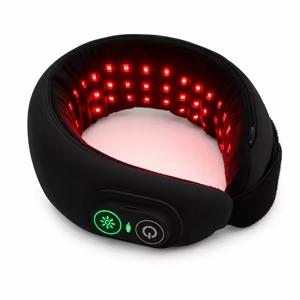
The unit you receive is the EYCO red-light wrap. Assembly adds clear tubes at the ears, a thin copper lining under the outer fabric, and a nanocrystal infused cotton mesh inside the front panel.
01 · Outer shell
Black fabric wrap with an LED panel and a strap. This is the EYCO unit, not a separate headset.
02 · Thin copper
A thin copper layer sits under the top layer. It is a lining in the stack, not a power source and not a claimed shield against electromagnetic radiation.
03 · Nanomaterial
The nanocrystal-infused botanical cotton mesh sits a layer below the copper, inside the front panel. It is passive: no current and no UV. What that class of material can and cannot do is below.
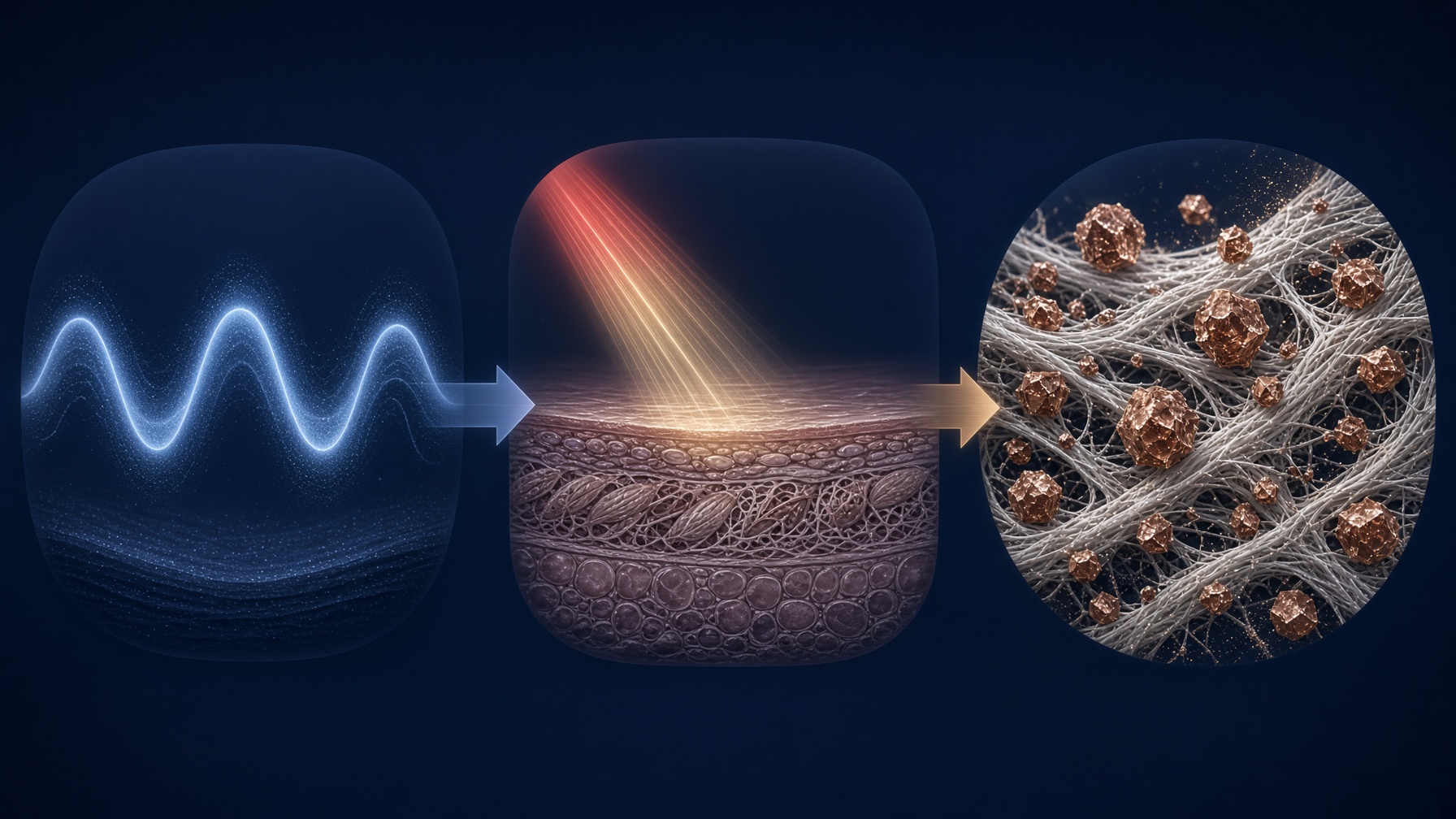
Two tubular constructs, one on each side, sit over the ears. Tactile vibration travels into those chambers and becomes a resonant sound, so the 10–40 Hz pulse is felt and heard together.
Light reaches the skin. Copper sits above the mesh as a lining. The botanical nanocrystal layer stays next to the session, not mixed into the shell. The result is one wearable doing light, vibration, and resonant sound, with a copper lining and a passive mesh — instead of a light-only band.
Green-engineered nanocrystal technology
Inside the front panel is a cotton mesh carrying plant-derived nanocrystals, seen as red and bluish-violet. The layer is passive. Textile and materials papers explain this class of crystal. They do not show that the cloth treats the brain.
A cellulose nanocrystal is the crystalline rod inside plant fiber: a few nanometers wide and on the order of 100–300 nm long, with a large surface for its mass. Cotton fabric is already highly crystalline. Ruiz-Caldas and colleagues (Journal of Materials Chemistry A, 2023) converted post-consumer cotton into citrated cellulose nanocrystals at about a 78% yield, with crystallinity close to the starting cloth.
A 2024 review in Cellulose surveyed nanocellulose in textiles as a biodegradable material for reinforcement, coatings, and surface function. That literature is about fiber science, not a drug.
Cellulose nanocrystals can stack into films that reflect a band of color without a conventional dye. A 2025 Langmuir perspective and a 2022 review in ACS Applied Polymer Materials describe that structural color. On cloth, ordered nanoparticles add Bragg reflection and Mie scattering (Optical Materials Express, 2017, silica on cotton). Nanoscale fibers also change how infrared is scattered (ACS Nano, 2021).
It does not add a new wavelength. The LEDs remain 660 nm and 850 nm. Color in the cloth is not a treatment.
The closest worn-textile studies use carbon dots made from plants and loaded onto cotton. A 2026 Journal of Materials Science paper coated cotton with dots from moringa and clove: blue-to-green glow under lab light, antioxidant activity, an antibacterial effect, and more than 95% blocking of UVA. A 2025 Cellulose paper made dots from cotton waste and reported a UV protection factor above 50 and more than 90% reduction of Staphylococcus aureus, including after washing.
Frontiers in Materials (2024) put nopal-residue carbon dots on fabric for UV absorption. In cells, not in this device, carbon dots from Withania somnifera (Nanoscale Advances, 2023) were tolerated by epidermal cells, limited UVB damage, and raised wound-healing signals in vitro.
No published trial has measured this mesh, under 660 nm and 850 nm light, for mental clarity or any health outcome. Textile results on other fabrics, including UV blocking, antibacterial effects, and cell studies, are not benefits of this mesh. The cloth does not emit a treatment field, does not carry current, and the LEDs are not UV. A clarity session is the light, the 10–40 Hz pulse, and how you use it. The mesh is a material distinction, not a treatment.
Daily use
Use the session for mental clarity and focus. The neck is a secondary placement of the same device.
Context
Studies of light and pulse used other devices, animal models, or clinical protocols. They are not results of the NB-Quantum Device. This is a full body wellness device. These statements have not been evaluated by the Food and Drug Administration. It is not a medical device and is not intended to diagnose, treat, cure, or prevent any disease.
The NB-Quantum Device is a full body wellness device for mental clarity, focus, steadier attention, and recovery support. These statements have not been evaluated by the Food and Drug Administration. It is not cleared or approved by the FDA as a medical device. It is not intended to diagnose, treat, cure, or prevent any disease, including cognitive, neurological, or musculoskeletal conditions. Do not look into the LEDs.
Since 2016, research groups including MIT have published on 40 Hz light, sound, and vibration in mouse models and small human pilots, including studies in Alzheimer’s disease. Those findings are investigational. This product was not used in those studies and does not treat Alzheimer’s disease, memory loss, or any other condition.
Red and near-infrared light is studied on other devices for a range of uses, including exercise, joints, and light applied to the head. Some papers report cognitive or recovery outcomes in those settings. Those outcomes are not claims for this device. On this product the light is part of a general wellness session for clarity and focus. Body placement is optional and is not a treatment.
These papers study other devices, models, or textiles. Listing them is not evidence that this product treats any condition.
Hardware
How it stacks up
A side-by-side look at other wellness devices. The NB-Quantum Device is a full body cordless wrap with adjustable 10–40 Hz light, resonant sound from tubular inserts, kneading vibration, a botanical nanocrystal mesh, and a copper lining. It is a full body wellness device.
| Feature | NB-Quantum | Vielight Neuro Gamma 4 | MitoMIND Helmet | Apollo Neuro | OptoCeutics EVY |
|---|---|---|---|---|---|
| Primary modality | 660/850 nm light + 10–40 Hz pulse + vibration-to-sound + mesh + copper | 810 nm NIR, 40 Hz, transcranial + intranasal | 810 nm NIR helmet, adjustable Hz presets | Haptic vibration only (wrist/ankle) | 40 Hz visible light + optional app sound |
| Form factor | Cordless wrap | Headset with modules + nasal applicator | Hard helmet + controller | Small wearable band | Desktop light panel |
| Wavelengths | 660 nm red + 850 nm NIR | 810 nm only | 810 nm (optional 1070 nm nasal) | None (vibration) | Visible white (ISF 40 Hz flicker) |
| Pulse range | User-adjustable 10–40 Hz | Fixed 40 Hz | Presets including 40 Hz + manual | Proprietary vibes | Fixed 40 Hz |
| Sound / resonance | Clear tubular inserts turn vibration into resonant sound | None | None | None | Optional app-based 40 Hz audio |
| Material stack | Botanical nanocrystal cotton mesh + thin copper lining | Standard headset materials | Plastic helmet | Standard band | Standard light panel |
| Session length | Presets 5–12 min (timer on site) | 20 min fixed | 6–15 min presets | Hours of daily wear recommended | 60 min daily |
| Power / battery | 2000 mAh cordless | Typically powered / fixed session | Wired controller | Rechargeable band | Mains powered |
| Positioning | Full body wellness device: clarity, focus, recovery support | Competitor’s own positioning | Competitor’s own positioning | Competitor’s own positioning | Competitor’s own positioning |
| Price band (approx.) | $175.00 limited pre-order (regular $399.00, 56% off); volume / wholesale on request | ~$1,799 | ~$2,195 | ~$290–400 | ~$2,999 |
| Key differentiator | Multi-signal + custom material stack in one wearable | Highest published irradiance + most studies | Value 810 nm helmet with presets | All-day haptic wear | Invisible Spectral Flicker comfort |
Prices and specs are approximate from manufacturer materials as of late 2026 and may change. Competitor descriptions are theirs, not endorsements and not medical claims by NB-Quantum. These statements have not been evaluated by the Food and Drug Administration. This product is not a medical device and is not intended to diagnose, treat, cure, or prevent any disease.
Inquire
Interest is limited to volume pricing and wholesale. Full body wellness device. These statements have not been evaluated by the Food and Drug Administration. Not a medical device.